

This guide cuts to what matters, and it skips the fluff. Ransomware as a Service has returned, meaner in method and scale. Read this for ransomware 2025 tactics, checklists, and fast defenses. Stay practical, test often, and report progress.
The Resurgence of Ransomware-as-a-Service in 2025
Threats rose sharply in 2025, driven by scale and tooling. Operators refined marketplaces, and affiliate ransomware networks expanded reach fast. This is a clear sign that Ransomware as a Service has moved from niche to mainstream crime. Payouts rose, and victims felt pressure to pay quickly.
Defenders found detection noisy, and visibility trailed attacker speed. Threat actors used commodity kits for fast encryption and leak pressure. Teams need better logging and threat intelligence feeds to cut dwell time. That matters for ransomware 2025 planning and to set priorities.
How the RaaS business model evolved to target more victims
Operators now sell malware, dashboards, and negotiation services to affiliates. That market model, called RaaS business model explained, lowered the skill barrier for attackers and raised volume. Affiliates run campaigns quickly, and the split between operator and affiliate hides true authorship.
Economic and geopolitical triggers behind the 2025 ransomware surge
Sanctions, hosting shifts, and legal gaps changed attacker incentives and safe havens. Infrastructure moved, payments became easier, and extortion tactics evolved. Those shifts fueled broader cyber extortion trends, and they shaped ransomware 2025 activity. Defenders must add geopolitics to threat modeling.
Understanding the Modern RaaS Ecosystem
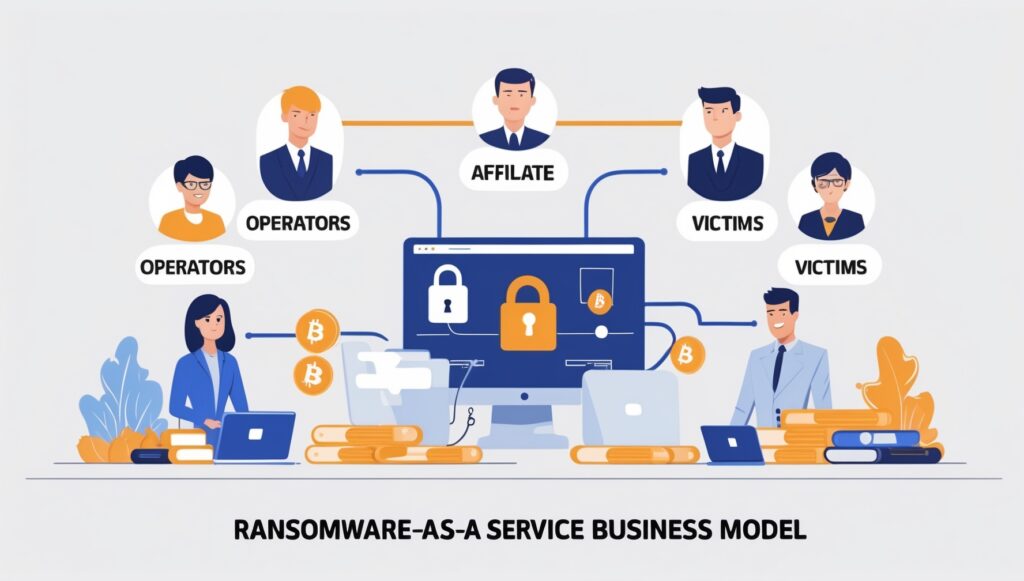
Ecosystems bundle malware, control panels, and monetization services so attackers scale like platforms. This marketplace model, Ransomware as a Service, lets criminals rent capabilities instead of building them. Defenders need threat intelligence feeds and solid telemetry to spot early signals.
Affiliates exploit credentials and misconfigurations to move laterally, often unseen. Modern defense needs automation, wide logging, and ransomware detection tools to correlate identity, network, and host signals. Adopt a proactive cybersecurity strategy to hunt and reduce noise.
From dark web subscriptions to “affiliate” programs: how attackers operate
Marketplaces list builders, access brokers, and negotiation services for sale. Affiliates join affiliate ransomware networks, buy access, and run campaigns with little skill. They use stolen credentials, lateral movement tools, and fast encryption and decryption attacks, forcing defenders to automate containment.
Top RaaS gangs dominating the threat landscape in 2025
Some groups professionalized, others splintered and rebranded after takedowns. Patterns in tooling, leak sites, and negotiation style reveal actor fingerprints. Use RaaS group detection methods and telemetry to prioritize containment. That sharpens the ransomware recovery process, and shortens investigations.
Industries Most at Risk from Ransomware 2025 Attacks
Hospitals, schools, and factories saw more attacks in 2025, they paid heavy costs. Those sectors run legacy systems, have high uptime needs, and limited segmentation. Expect Ransomware as a Service actors to target systems where recovery is slow. Use ransomware prevention tips, tested backups, and runbooks.
Critical infrastructure is attractive because outages cause public pressure and urgent responses. Attackers pick weak segmentation and exposed admin accounts to gain leverage. Defenders must enforce privileged access management, strict segmentation, and rapid detection. Layered backups and a solid data backup strategy limit leverage.
Healthcare, education, and manufacturing: prime targets again
Hospitals hold life-critical systems and sensitive records that attackers value highly. Universities house research and legacy apps, and manufacturing mixes OT with IT networks. Each needs tailored ransomware prevention tips, hardened backups, and tested ransomware recovery process playbooks. Regular drills cut restore time.
Why critical infrastructure remains ransomware’s favorite victim
Attackers pick systems where outages create immediate pressure to restore services. OT and ICS often lack modern segmentation, and they resist zero trust implementation. That boosts leverage, and it complicates the ransomware recovery process, increasing cost and public risk. Plan accordingly, and test often.

Tactical Defense Strategies for Today’s Ransomware-as-a-Service Threats
Start with identity, assume compromise, and enforce least privilege everywhere. A zero trust implementation reduces lateral movement by isolating users and devices. Combine with endpoint telemetry and automated containment to shrink Ransomware as a Service attackers’ window. A strong data backup strategy lets you refuse extortion and restore quickly.
Patch promptly, enforce MFA, and reduce exposed admin accounts across environments. Use ransomware prevention tips, like segmentation and least privilege, to cut attack paths. Automate triage and prioritize alerts with SOC automation, and rehearse runbooks so restores work under time pressure.
Implementing zero trust architecture without breaking everything
Begin with pilots on critical apps, measure user impact, and iterate. Enforce device posture checks, session policies, and MFA, and tune rules regularly. Integrate privileged access management and endpoint signals to reduce attack surfaces. That makes zero trust implementation practical while keeping operations steady.
Building an airtight data backup strategy for rapid recovery

Design backups with immutability, air gaps, and separate restore credentials. Define RTOs and RPOs, rehearse restores under time pressure, and automate integrity checks. Use encrypted, versioned copies offsite, and validate frequently. A strong data backup strategy lets teams refuse extortion and speeds ransomware recovery process.
Crafting a cyber incident response checklist that actually works
A clear checklist names detection, containment, communications, legal, and recovery owners. Assign roles, escalation paths, and preserve logs for forensics and compliance. Integrate SOC automation for faster triage, and rehearse the cyber incident response checklist often so teams act without confusion.
CIO Playbook: Fast Actions and Tools That Make a Difference
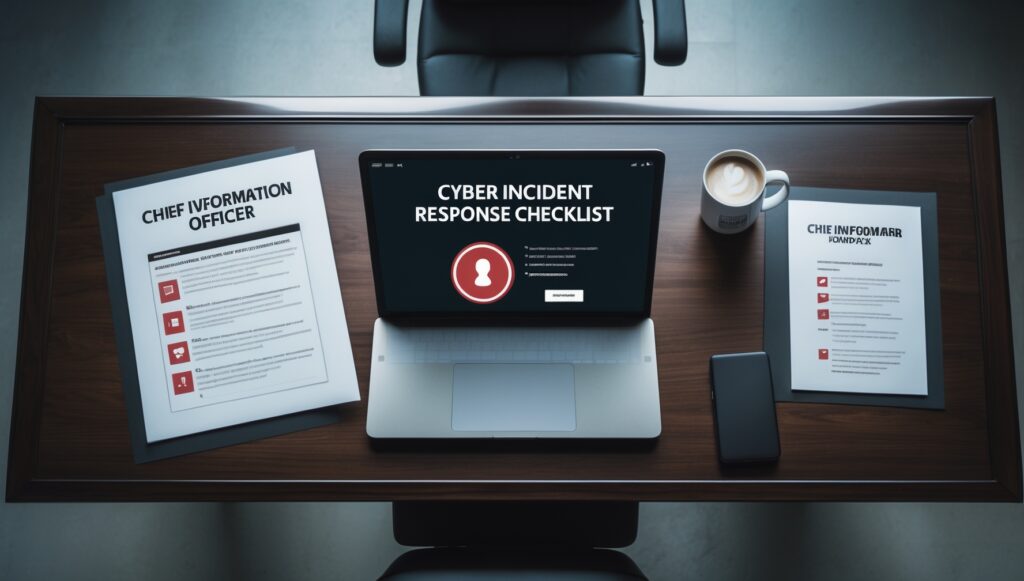
CIOs must fund basics now, patching, MFA, backups, and telemetry. Short wins buy time, and visible metrics convince boards to invest in resilience. Prioritize endpoint detection, immutable backups, PAM, and XDR for rapid containment. Consider Ransomware as a Service threats, and evaluate SentinelOne ransomware defense for fast endpoint response.
Measure mean time to detect, mean time to contain, and time to restore. Contract SLAs with backup and IR vendors so restores meet expectations. Keep a simple executive dashboard for patching, MFA, backups, and drills. Use a concise cybersecurity resilience checklist for the board, and update it regularly.
5-point CIO ransomware readiness checklist
Validate a tested data backup strategy, with immutability and routine restores. Enforce MFA, rotate admin credentials, and use privileged access management. Deploy endpoint detection, automate SOC triage, run tabletop drills, and budget for incident response. Report metrics to the board, and update playbooks frequently.
Recommended tools and solutions (including SentinelOne+)

Choose tools that match people and process, not marketing spin. Combine SentinelOne ransomware defense for endpoints, immutable backups, and SIEM or XDR for correlation. Add PAM for credential control, and automation to reduce manual errors during incidents. Integrate, test, and set SLAs for restores so tools help in crisis.
The Future of Ransomware-as-a-Service and What Comes Next
Expect automation and AI to speed reconnaissance, and to obfuscate tool origins. Attackers will optimize payment flows, and will target systems with high recovery cost. Defenders must use threat intelligence feeds, automated playbooks, and continuous testing. Adopt a proactive cybersecurity strategy, and invest in automation and drills to cut attacker yield.
Keep board reporting simple, and track metrics that show reduced business risk. Update the ransomware mitigation plan annually, and rehearse restores under real pressure. Drive zero trust implementation, remove excess privileges, and keep immutable backups offsite. Do these, and breaches become manageable incidents, not catastrophes.
Further Reading
Further reading, guidance, and practical playbooks are available from CISA StopRansomware for defenders, responders, and leaders.
🔗 https://www.cisa.gov/stopransomware












Leave a Reply