

Introduction to Startups and Innovations
Startups form the fast lanes where entrepreneurship tests new ideas, they reshape markets with energy and speed. Early teams favor lean startup methodology and focus on a minimum viable product (MVP) to validate demand before expanding further, this reduces waste and raises the odds of survival.
Today innovation often happens outside big labs, it blooms in innovation hubs and small teams that move fast. Founders use seed funding and adopt growth hacking habits to refine products quickly, they learn from customers and iterate until product market fit appears.
Why Startups Are Key to Economic Growth
Small teams create jobs and new services, they expand sectors and attract venture funding that ricochets through local economies. When startups succeed they boost exports and local spending, they also introduce market disruption that pushes incumbents to improve.
Startups often accelerate digital transformation in older industries, they show how product innovation lifts productivity and consumer choice. That ripple effect raises wages, it creates tax revenue and it builds stronger economic clusters around startup incubators.
The Role of Innovation in Modern Business
Innovation gives companies a reason to survive, it moves firms from safe to remarkable by changing offerings and models. Corporations partner with young teams to borrow speed, and they embed innovation strategy into operations to remain relevant.
Innovation also reduces cost with automation and smarter processes, it improves customer experience and opens new revenue lines. Companies that ignore continuous improvement risk stagnation, they lose talent and market share to nimble rivals.
The Startup Ecosystem Explained
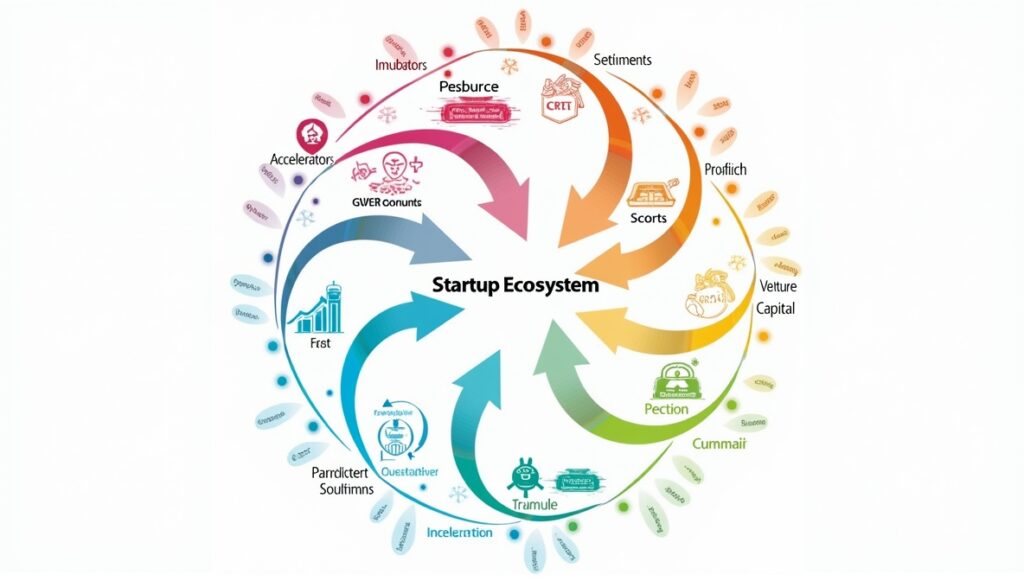
A startup ecosystem mixes founders, angel investors, mentors and programs that give advice and capital. The best ecosystems include accelerator programs that compress years of learning into months, they give startups exposure and structured feedback quickly.
Ecosystems rely on networks such as innovation hubs and universities that supply talent and research, these hubs create reliable pipelines for ideas. Supportive regulation and access to venture funding are also core, they let teams scale beyond local markets.
Incubators, Accelerators, and Venture Capital
Incubators offer early space and mentoring, they often connect founders with seed funding and legal help in first months. Accelerators add pressure, education and demo days where startups pitch to angel investors and funds.
Venture capital then backs scale, it expects large returns and sets growth targets, this brings scrutiny and resources. Good investors align on mission, they help with hiring, partnerships and follow on rounds that fuel scale.
Government Policies Supporting Startups
Government policy can lower entry friction with tax breaks, grants and easier business registration procedures. Smart policy invests in competence, it funds tech parks and supports startup incubators that nurture local entrepreneurship.
Regulation must balance safety with speed, too much red tape kills momentum while thoughtful rules protect consumers and attract institutional capital. Public procurement can also seed demand for novel solutions in health, transport and urban services.
Innovative Business Models Shaping the Market
New models swap ownership for access, subscription setups turn one time sales into steady relationships with customers. Companies apply growth hacking and data to improve lifetime value, this changes how firms budget and measure success.
Platform models connect users and suppliers, they grow network effects and scale faster than classic players. Platforms use product innovation and user feedback loops to refine matching, they often reshape entire categories.
Subscription-Based Startups
Subscriptions create predictable revenue and tighter customer relationships, founders use metrics to manage churn and lifetime value. A good subscription design balances price, value and simplicity to encourage loyalty without friction.
Teams often rely on trial periods and referral incentives to grow, they track unit economics carefully to ensure each customer delivers profit over time. Value packaging and personalization often become key competitive levers.
Platform and Marketplace Innovations
Marketplaces reduce search costs and create liquidity for buyers and sellers, they scale via network effects as more users attract more supply. Successful platforms focus on trust, logistics and fair pricing to keep the experience smooth.
Platforms also enable vertical specialization and data driven improvements, they monetize with transaction fees and premium tools while using innovation hubs to recruit partners and integrations.
Emerging Technologies Driving Innovation

Technologies like AI reshape decision making, they let companies personalize at scale and automate complex tasks. Teams craft new features with machine learning that predict needs and increase retention without expanding headcount.
Blockchain and Web3 open new models for trust, payment and ownership that disrupt finance and digital goods. Founders use minimum viable product (MVP) approaches to test token models and governance structures before broader launches.
Artificial Intelligence and Machine Learning
AI teams build models that analyze user behavior and optimize offers, this improves conversion and product fit. Startups that pair domain expertise with digital transformation skills often extract outsized value from data.
Ethics and data governance matter because models can amplify bias, responsible founders embed guardrails and clear privacy rules. That discipline helps scale solutions into regulated markets like healthcare and finance.
Blockchain, Web3, and Fintech Startups
Fintech startups reinvent payments, lending and asset custody with new plumbing and better UX, they use venture funding to scale regulatory work and security. Some Web3 experiments explore decentralized ownership and revenue sharing models.
Blockchain fits use cases that need tamper proof records, but many applications benefit from simpler databases, teams must match technology to real business needs. When matched correctly the results can move value and trust across borders.
Challenges Faced by Startups in Scaling Innovation

Scaling requires capital, systems and people who can run larger operations without slowing product updates. Founders often face pressure from investors to increase revenue quickly while protecting culture and code quality.
Market timing also matters, if demand lags a product can stall even with good tech. Competing against incumbents with deep pockets requires clever positioning and efficient use of seed funding and partnerships.
Funding Limitations and Investor Pressure
Early funding can be scarce, founders trade equity for capital and sometimes lose control of direction. Investors expect rapid growth and clear metrics, this can force premature scaling decisions.
Smart founders balance runway with learning, they use staged finance and clear milestones so funding unlocks growth without sacrificing product quality. Clear metrics reduce friction with investors and keep incentives aligned.
Competition and Market Saturation
Many sectors see crowded offerings, competing firms copy features and race on price, this compresses margins. To stand out founders need unique value and strong relationships with customers.
Saturated markets reward distribution and branding, not just better tech. That is why growth teams often pivot to niche segments where core strengths convert to higher returns.
Successful Case Studies of Startups and Innovations

Many unicorns began as risky experiments that solved clear user pain, they focused on retention and scaled after repeatable acquisition channels appeared. Examples show how lean startup methodology and tight product cycles produce startup success stories.
In developing countries, local startups adapt global ideas to domestic pain points, they often use mobile first designs and local partnerships to expand. This adaptation creates resilient companies that solve real problems and scale regionally.
Unicorns That Changed the Game
Unicorns often scaled via platform effects and relentless focus on metrics, they gathered network advantages that competitors struggled to match. Their rise shows how product market fit plus timing fuels massive growth.
These companies also reinvest profits into features and ecosystems, they fund acquisitions and partnerships that widen moats. The lesson is persistence, relentless user focus, and disciplined capital deployment.
Innovative Startups in Developing Countries
Startups in lower income regions innovate around access, they solve logistics, payments and education with mobile centric solutions. Many use angel investors and local grants to pilot services and prove impact quickly.
Local talent and context knowledge let teams iterate on real constraints, they often partner with NGOs and telcos to expand. These collaborations yield scalable models that address social problems and create business value.
The Future of Startups and Innovation

Expect more convergence between AI, IoT and finance as startups build cross domain services that combine data and real world interactions. Founders will prioritize sustainable features and measurable impact as users demand accountability.
Talent distribution will keep shifting as remote work opens new hubs, this reduces costs and widens pools of expertise. Funding models will diversify beyond VC to include revenue based finance and community supported models.
Trends to Watch in the Next Decade
Watch for platform composability, APIs that let smaller teams assemble powerful products with less capital. This lowers barriers for new entrants and increases product experimentation.
Sustainability and circular models will also shape product roadmaps, consumers reward transparency and measurable impact. Startups that combine profit and purpose will gain durable advantage.
The Role of Sustainability and Green Innovation
Green solutions will move from niche to mainstream as regulation and demand align behind decarbonization goals. Startups apply innovation to energy, supply chains and product lifecycles to reduce waste.
Sustainable models often need different metrics and longer horizons, patient capital and policy support help these startups bring tangible environmental benefits at scale.
Conclusion
Startups create momentum by pairing entrepreneurship with practical innovation strategy, they turn small bets into broad change. The combination of product focus, capital, and persistence drives job creation and new services that reshape markets.
If you track the right signals you will see where value concentrates, that helps founders and investors make better choices. Supportive ecosystems, smart funding, and repeated learning turn raw ideas into lasting companies.
How Startups and Innovations Will Shape Tomorrow
Tomorrow will favor teams that move from idea to validated product fast, they will use lean startup methodology and strong metrics to win. Ecosystems that fund learning and accept risk will drive regional competitiveness.
Policy, capital, and talent must align to support sustainable growth, this creates more resilient economies and expands opportunities for founders worldwide.
Table: Typical Early Funding Stages and Players
| Stage | Typical Players | Typical Purpose |
|---|---|---|
| Pre-seed | Founders, Friends, Angel investors | Build MVP and initial validation |
| Seed | Angel investors, Seed funds | Product development and early traction |
| Series A | Venture capital, strategic investors | Scale revenue and hire key teams |
| Growth | Growth equity, late stage VC | International expansion and acquisitions |
Case Study Snapshot
A fintech startup built an MVP for small merchants using mobile payments and local partnerships. They launched with seed funding, refined the product through direct merchant feedback, and scaled regionally by partnering with a telco. The result was faster adoption and a clear path to profitability.
External Resource for Readers: For more insights into global startup ecosystems, see the OECD report on entrepreneurship and innovation.
















Leave a Reply