

Introduction: AI as the New Global Battleground
The U.S. vs China: Stanford’s AI Innovation Index Exposes Growing Global Divide frames the contest. It shows investment, research, patents, and compute shaping strategic power. You will learn who leads, why, and where the AI innovation gap appears. This piece uses the Stanford AI report and public data to explain.
Policy makers, researchers, and investors read this Index for clear global AI competition signals. It reveals where U.S. AI leadership stays strong, where China AI strategy accelerates. The Index is not a forecast, it is a snapshot, so treat its trends as signals, not certainties. Stanford HAI
Stanford’s AI Innovation Index Explained
The U.S. vs China: Stanford’s AI Innovation Index Exposes Growing Global Divide names measurable signals. It aggregates model releases, investment, publications, patents, and compute estimates. Those signals let analysts compare AI research dominance and AI investment trends across nations, spotting momentum over time. Use the Index to spot momentum, not to predict exact outcomes.
The Index draws from public datasets, VC trackers and paper repositories, as explained in the Stanford AI report, and standardizes metrics. Stanford documents trends like private investment totals and model counts, which reveal concentration. This transparency helps interpret the technology race U.S. vs China and sets a common language for debate. Stanford HAI
What the Index Measures
The Index measures publications, patents, model releases, private investment, and compute capacity. It tracks training costs, model size, and deployment metrics to show real capability. Together these indicators map AI patents and publications and compute infrastructure across nations. That mix balances quantity and quality.
Why It Matters for Global AI Leadership
Indicators show who attracts talent, capital, and market share. Those leaders set standards that influence AI policy and regulation and AI-driven economic growth. Understanding the Index helps predict where innovation clusters will form. The stakes are global, affecting trade, security, and standards.

The U.S. Position in the AI Race
The U.S. leads in private funding, elite labs, and platform builders. In 2024 U.S. private AI investment reached about $109.1 billion, vastly outpacing China. That capital fuels AI startups and venture capital flows and supports large scale compute. This concentration bolsters U.S. AI leadership internationally. Stanford HAI
Yet the U.S. faces risks from chip supply limits and immigration policy. Export controls shift supplier choices while visa rules affect the AI talent pipeline. Policy gaps in AI policy and regulation could slow safe deployment and growth. Investments in compute infrastructure and training remain urgent.

Strengths of U.S. AI Innovation
Strengths include deep venture ecosystems, cloud compute capacity, and top universities. This mix produces rapid prototyping, scalable products, and global platform reach. Those advantages anchor AI research dominance and AI startups and venture capital flows, keeping the U.S. competitive worldwide.
Key Weaknesses and Challenges
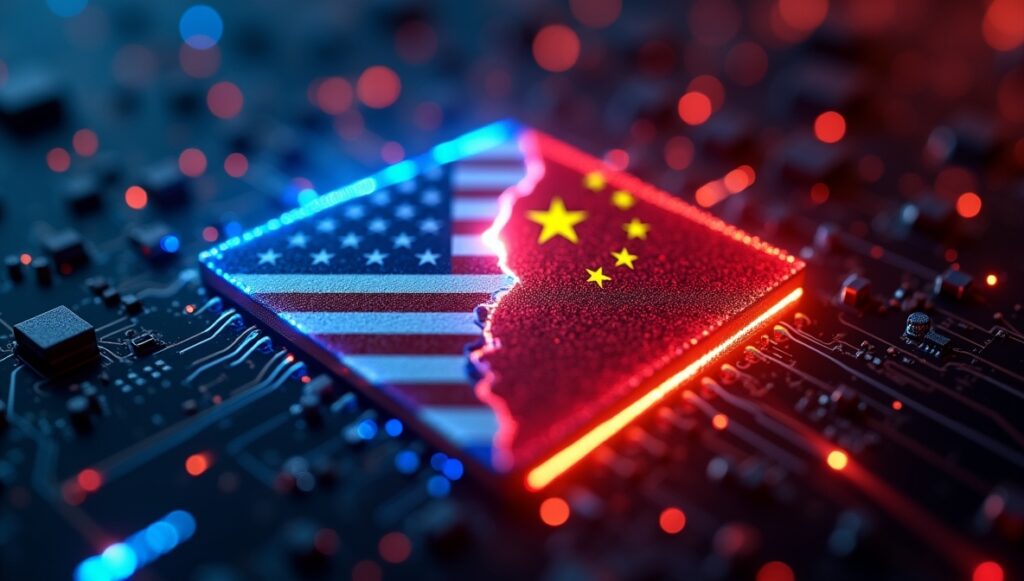
Weaknesses include semiconductor supply chain dependency, regulatory uncertainty, and uneven data governance. Supply chain bottlenecks expose vulnerability and export controls reshape partnerships. Talent shortages and unclear AI policy and regulation may slow real world deployment. Addressing these gaps requires coordinated public private action fast.
China’s AI Push on the Global Stage
China invests heavily in AI, from publications to state backed infrastructure. Its China AI strategy favors scale and rapid deployment across industries. High patent filings and model releases show applied strength more than lab prestige. These choices shrink the AI innovation gap in real world uses.
Beijing funds chip plans, cloud clusters, and data center projects to boost capacity. Recent projects aim to centralize compute, reducing reliance on foreign chips and suppliers. Those moves target semiconductor supply chain resilience and domestic compute infrastructure growth, and state backing accelerates large scale deployment quickly. Tom’s Hardware+1
Areas Where China Leads
China leads in AI patents and publications, showing research volume. Its companies deploy AI across finance, surveillance, and consumer services quickly. This gives China edge in applied systems and AI deployment at scale, where volume can beat precision.
Strategic Investments and State Support
China’s state planning channels subsidies to national champions and regional data hubs. It builds domestic chip roadmaps and funds cloud clusters to cut import risk. This is central to China AI strategy, and to shoring the semiconductor supply chain for strategic independence. The Wall Street Journal
Comparative Analysis: U.S. vs China in AI Innovation
Comparisons illustrate the global AI competition, with the U.S. dominating private investment. In 2024 the U.S. private AI investment was about $109.1 billion versus China’s $9.3 billion. These differences reflect AI investment trends and the balance between scale and innovation. Stanford HAI
Quality metrics show China closing gaps on benchmarks, yet the U.S. yields more notable models. The U.S. wins in platform reach and commercial ecosystems, accelerating AI startups and venture capital. China shines in deployment, patents, and scale, which gives it different influence.
| Metric | United States | China |
|---|---|---|
| Private AI investment (2024) | $109.1 billion | $9.3 billion |
| Notable model releases (recent) | 40 | 15 |
| Publications (volume) | High impact concentrated | Higher by volume |
| Compute capacity (approx) | 75% | 15% |
Research Output and Publications
China posts more AI patents and publications by volume, often from broad lab and conference output. U.S. AI research dominance appears in selective, high impact papers from elite teams. Volume favors China, while breakthrough influence stays concentrated in key U.S. centers overall.
Patents, Startups, and Tech Ecosystem
Patents indicate R&D intensity, and China files aggressively across sectors. The U.S. leads in startup formation and venture scale, driving commercialization. Together these elements form ecosystems that determine long term advantage and spillover. Watch AI startups and venture capital and AI patents and publications to gauge momentum.
Implications for the Global Economy and Geopolitics
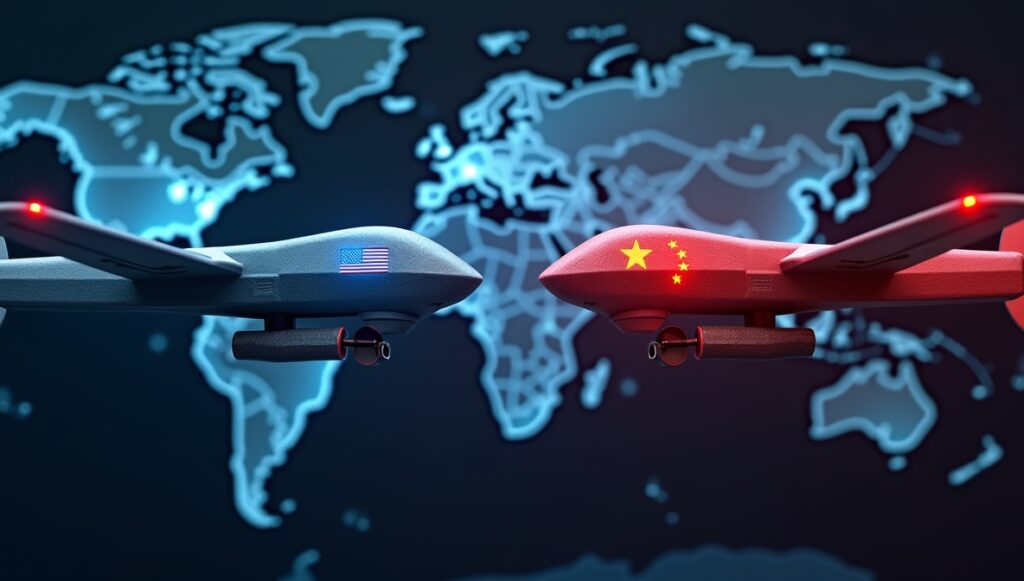
AI leadership alters trade patterns, supply chains, and high value industries. The technology race U.S. vs China forces allies and firms to choose platforms or interoperability. These decisions shape AI-driven economic growth, and determine market access for new products. Smaller states face hard strategic choices.
Firms must map dependencies on cloud vendors, chips, and data supply chains. Policy makers watch AI policy and regulation to protect consumers and maintain competitiveness. Export rules and standards will remap who sells tech where and on what terms. Expect slower integration in some regions.
The Future of AI: Cooperation or Competition?
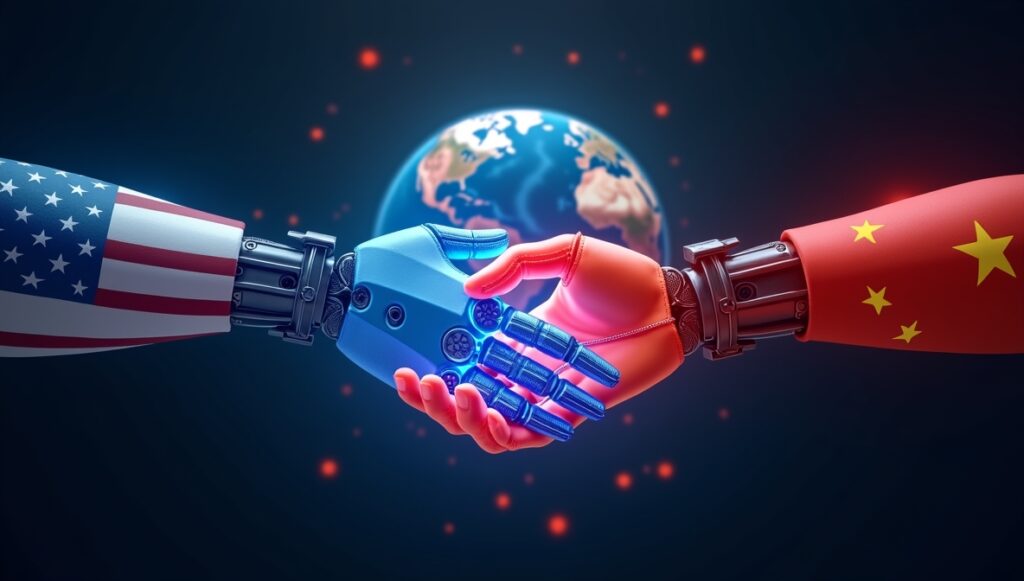
Scenarios range from bifurcated tech blocs to limited cooperation on safety and standards. Shared norms on AI governance and ethics could prevent dangerous escalation, but political trust matters. Expect mixed outcomes, with tight hardware controls and selective research collaboration. The path depends on deliberate policy choices.
Investors should stress test supply chains and monitor export controls closely. Governments must secure compute infrastructure and weigh national security AI risks against research openness. Adaptive approaches that combine competition and cooperation will likely reduce systemic risk. Act now, plan for years.
Conclusion: Who Will Shape the Next Era of Artificial Intelligence?
The U.S. vs China: Stanford’s AI Innovation Index Exposes Growing Global Divide shows complex strengths. The U.S. leads in private funding and platforms, reflecting U.S. AI leadership, while China leads in volume and deployment, reflecting China AI strategy. Neither side holds absolute control, and both will shape norms, markets, and risks. hai-production.s3.amazonaws.com
To monitor the field track model releases, investment flows, compute capacity, and regulation. Act on talent, secure compute infrastructure, and push global AI governance and ethics standards. Read the full Stanford report here for detailed charts and data, at the Stanford AI Index. Stay curious, stay critical, and invest wisely. Stanford AI Index — AI Index Report















Leave a Reply